
Last week, our team visited Schubert Packaging Systems in Germany to conduct a Factory Acceptance Test (FAT) with one of our esteemed clients in the FMCG industry. As a leading engineering project delivery company based in the North West, we have participated in numerous FATs. In this blog post, we explore what a FAT is, its essential components, and the distinctions between a FAT and a Site Acceptance Test (SAT.)
What is a Factory Acceptance Test (FAT)?
A FAT is a comprehensive quality control process conducted at the manufacturing site before the equipment or system is transported to its final destination. It serves as a critical checkpoint to ensure that the delivered product meets all specified requirements and standards.
Why Do We Conduct FATs?
The purpose of a Factory Acceptance Test (FAT) is clear: to guarantee equipment compliance before leaving the manufacturing site. This meticulous process minimises the risk of issues during installation, contributing to project success. At Concept Projects Group, our commitment to excellence is evident in our rigorous FATs, identifying and rectifying potential issues to deliver functional, compliant products to our clients.
What’s on a FAT Checklist?
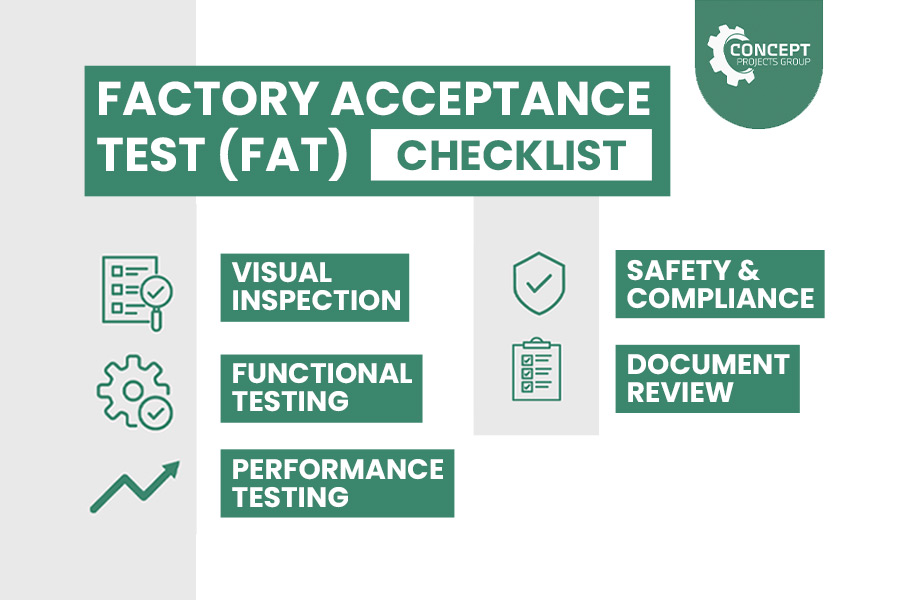
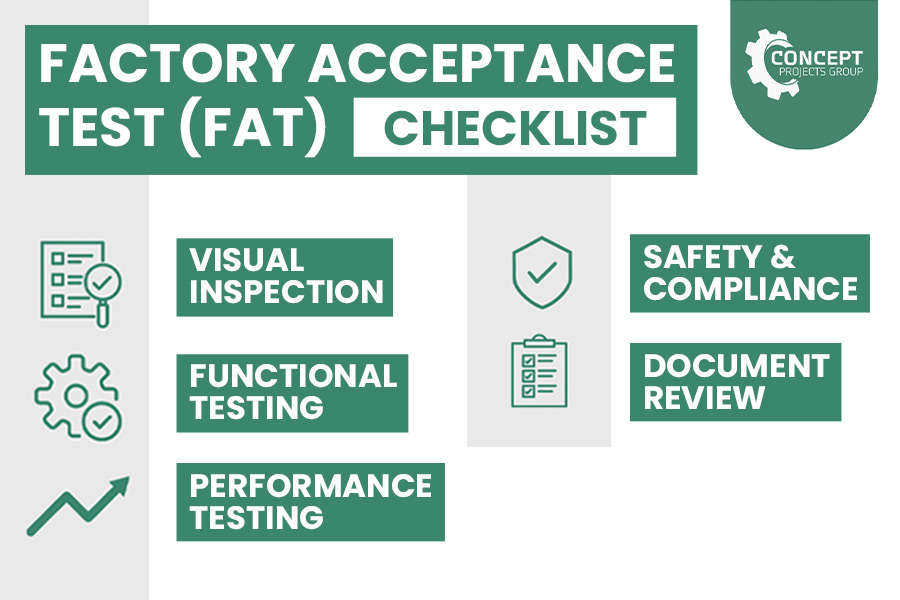
A Factory Acceptance Test (FAT) checklist is a comprehensive document outlining the criteria and procedures that must be evaluated and verified during the FAT process. It serves as a systematic guide for conducting the test, ensuring that all aspects of the equipment or system are thoroughly examined before it leaves the manufacturing site. The FAT checklist typically includes key categories:
Visual Inspection
Our engineers conduct a thorough visual examination of the equipment or system. This involves examining every component for physical defects, ensuring proper assembly, and confirming that the product aligns with design specifications. Visual inspection sets the foundation for a reliable and flawless end product.
Functional Testing
Our team rigorously assesses whether the equipment performs as intended. This includes evaluating all operational features, mechanisms, and interfaces. By simulating real-world scenarios, we ensure that the product meets the functional requirements outlined in the project specifications.
Performance Testing
Beyond functionality, performance testing examines the equipment’s ability to operate under varying conditions. Our engineers conduct stress tests, load tests, and endurance tests to ascertain that the product can handle the demands it will face in its intended environment. This stage guarantees optimal performance and longevity.
Safety and Compliance Checks
Ensuring the safety of both personnel and the end-user is paramount. The FAT checklist includes a comprehensive examination of safety features and compliance with industry standards and regulations. This includes assessing emergency shutdown systems, safety interlocks, and adherence to specific safety protocols.
Document Review
The devil is in the details, and our commitment to excellence extends to documentation. This stage ensures that the delivered product comes with comprehensive documentation, facilitating seamless integration and maintenance. Examples of documents include technical manuals, certificates, and compliance records.
What Are the Benefits of Conducting a FAT?
There are many benefits to conducting a factory acceptance test, including:
- Transparent Verification: FATs allow our clients to witness the equipment in action, ensuring transparency and providing a firsthand understanding of its capabilities.
- Tailored to Customer Needs: FATs guarantee that the equipment aligns precisely with the customer’s requirements, ensuring that their specific needs are met.
- Early Problem Identification: Identifying and addressing any equipment issues before installation at the customer’s site is a core objective of the FAT process, ensuring a smooth transition to subsequent project phases.
- Risk Mitigation: FATs serve as a preventive measure, averting costly mistakes and delays by identifying and rectifying issues early in the manufacturing process.
FAT vs. SAT: Understanding the Difference
While FAT focuses on the manufacturing stage, the Site Acceptance Test (SAT) occurs at the client’s location. SAT evaluates how the equipment integrates into the existing infrastructure and performs under real-world conditions. Together, FAT and SAT form a comprehensive quality control process.
At Concept Projects Group, we view FATs not just as a quality assurance step but as a proactive measure to ensure client satisfaction, cost-effectiveness, and the seamless success of every project we undertake. As a trusted partner across various industries, we are dedicated to exceeding client expectations.
Ready to elevate your next project? Contact us to learn more about our services and discover how we can add value to your projects.


